Folder · 5 pages
Sacramento Water Hardness and Softeners
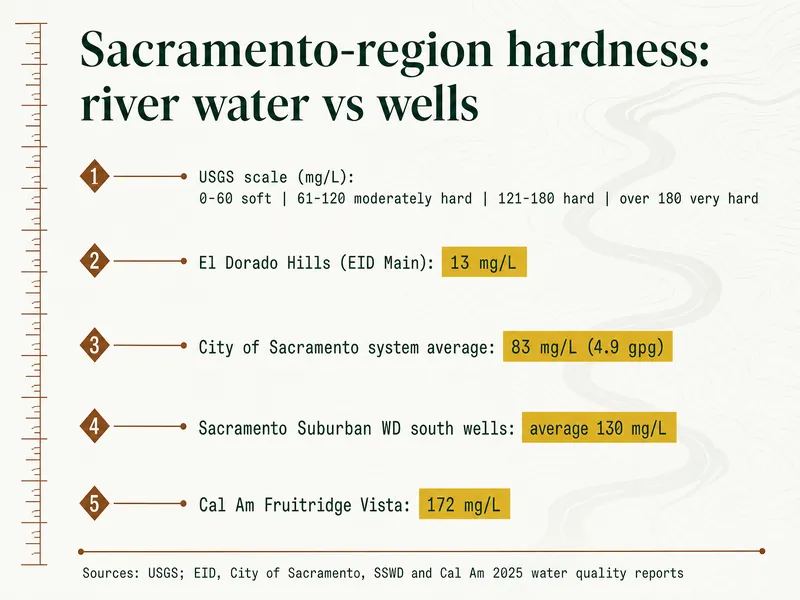
Sacramento water hardness depends on the supplier: river and lake systems report 13 to 83 mg/L, while groundwater-heavy systems report averages from about 96 to 172 mg/L in their 2025 reports.
Checked against its sources by Levee Line · how figures are sourced · Last checked
Readings first
- The City's 2025 consumer confidence report averages 83 mg/L across its system, 4.9 gpg: moderately hard on the USGS scale.
- Folsom Lake and American River water is soft: 13 mg/L in El Dorado Hills (EID Main) and 17 mg/L for San Juan Water District's treated water.
- The hardest system figures in the region come from wells: Cal Am Parkway averages 166 mg/L and Cal Am Fruitridge Vista 172 mg/L.
- USGS calls hardness "not a health concern, but it can be a nuisance": scale, spots and soap scum.
- California law (Health and Safety Code 116785) requires a new sewer-discharging softener to remove at least 4,000 grains of hardness per pound of salt.
- No Sacramento-region ban on softeners was found; Davis and Woodland ask residents to bypass or turn theirs down since river water arrived.
Is Sacramento water hardness high or low?
Low to moderate for most addresses: surface-water suppliers sit in the soft band, and the City of Sacramento averages 83 mg/L (4.9 gpg). The USGS scale reads 0–60 mg/L as soft, 61–120 as moderately hard, 121–180 as hard, and very hard above 180 mg/L. Reports print hardness in ppm (the same as mg/L); divide by 17.1 for grains per gallon.
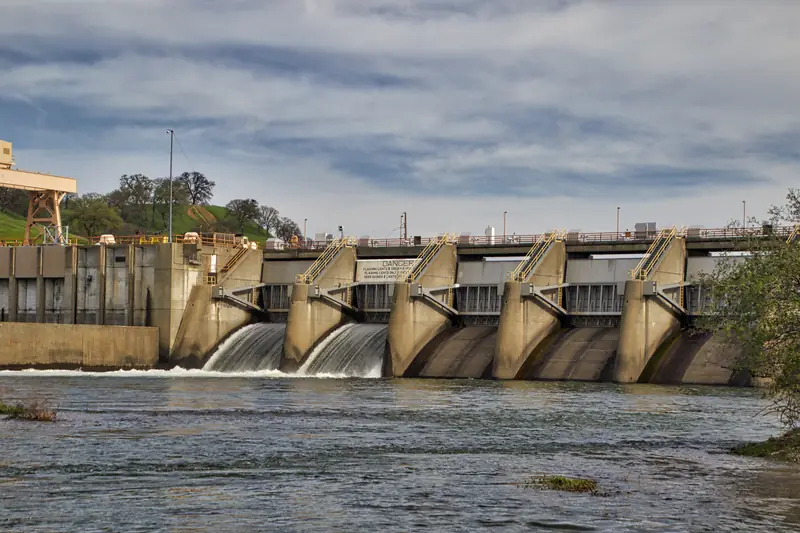
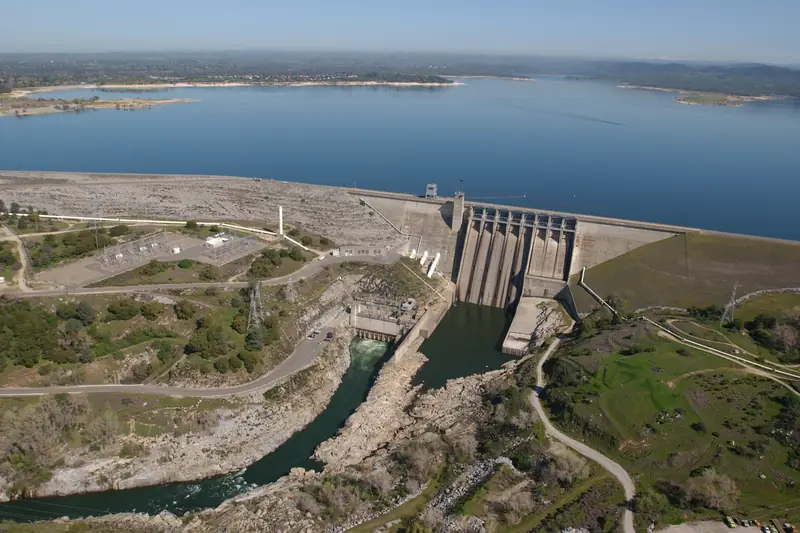
The reason is the source. USGS explains that water moving through soil and rock dissolves small amounts of calcium and magnesium, which is why the region's wells read higher, while the Folsom Lake systems all report under 30 mg/L. The page Is Sacramento water hard? walks through the City's three sources one by one.
Readings from the reports
- 13 mg/LEID Main average, El Dorado Hills (2025)El Dorado Irrigation District
- 83 mg/LCity-wide blend of rivers and wells, 4.9 gpgCity of Sacramento 2025 CCR
- 130 mg/LSSWD south-area wells, average (51–280)Sacramento Suburban Water District 2025 CCR
- 172 mg/LCal Am Fruitridge Vista system averageCalifornia American Water 2025 report
Which suppliers have the hardest water?
The groundwater-heavy ones: Cal Am's Sacramento systems, Sacramento Suburban Water District's wells and Rio Linda/Elverta. Cal Am prints system averages of 96 mg/L (Suburban-Rosemont), 105 (Antelope), 118 (Arden), 124 (Lincoln Oaks), 166 (Parkway) and 172 (Fruitridge Vista). Rio Linda/Elverta, on wells alone, averages 99 mg/L (67–140) in its 2026 report on 2025 water.
Sacramento Suburban is the tricky one. Its wells average 120 mg/L in the north and 130 in the south, but it also buys softer river and lake water, and its hard-water page says customers "may receive only surface water, groundwater, or a blend of both". Your tap moves through the year. The full list, supplier by supplier, is on Sacramento water hardness by district.
When does a softener make sense?
Mostly where a report shows well water above about 120 mg/L (7 gpg) and the scale bothers you; on soft river water it rarely earns its keep. A softener is a comfort and maintenance choice, not a safety device: it does nothing for bacteria, nitrate, arsenic or chromium 6. The City of Woodland's softener FAQ says some residents "reduce or even discontinue water softener use" now that river water averages about 4 grains per gallon.
California does not ban softeners. Health and Safety Code 116786 lets a local agency restrict new installations after a salinity study, and no Sacramento-region ordinance turned up. The decision steps, from reading your report to a well test, are on do you need a water softener.
How big a softener does a home need?
Smaller than most people expect: multiply grains per gallon by people by about 75 gallons per person per day, then size for roughly a week between regenerations. Penn State Extension uses the same 75-gallon figure in its worked example. A family of four on 130 mg/L (7.6 gpg) wells uses about 2,280 grains a day, so a 32,000-grain tank covers more than a week.
The arithmetic, flow rates and what California's efficiency rule means for salt use are on water softener sizing.
Do salt-free conditioners work?
They can reduce scale, but they do not soften: the calcium and magnesium stay in the water, and a hardness test reads the same afterward. University of Nebraska–Lincoln Extension's hard water publication says these technologies "do not remove the hardness" and that few conclusive studies confirm how well they work in homes. Where they fit, and how to read the claims, is on salt-free water conditioners.
 Hardness: Is Sacramento water hard? The City's three sources
 Hardness: Every supplier's hardness figure, with dates
 Hardness: Softener sizing arithmetic for a Sacramento home
 Supply: Which supplier serves your address
Sounding notes
This page draws on 2025 reports from the City of Sacramento, Sacramento Suburban Water District, the San Juan wholesale agencies, El Dorado Irrigation District, Folsom, Rio Linda/Elverta, Golden State Water (Cordova) and California American Water, plus West Sacramento's 2024 report, the latest it has posted. The hardness scale is the USGS one; legal points come from California Health and Safety Code 116780–116786. All were read in October 2026. Elk Grove Water District's report could not be opened, so no Elk Grove figure appears; that district's own annual report is the place to look. Where a supplier gives only source figures, no single tap figure is implied.
Downstream questions
Does Sacramento hardness change with the seasons?
For blended suppliers, yes. Carmichael Water District says its water is about 25 ppm in winter and 53 to 210 ppm in spring and summer when wells run, and Sacramento Suburban says customers may get surface water, groundwater or a blend. Lake-only systems such as Folsom stay close to their reported figure.
Is 83 mg/L hard enough to notice?
You may see light spotting on glass and shower doors, but 83 mg/L sits in the USGS moderately hard band, not the hard band. Many households on City of Sacramento water run no treatment at all.
Why do two neighbors in different districts report different scale?
Suburbs that look alike can sit in different supply areas. A street on San Juan treated water gets 17 mg/L, while a nearby street on Cal Am wells may get over 100 mg/L. Checking which supplier bills you settles it.
Where does the hardness number in a water report appear?
Usually in the secondary or "other constituents" table, under total hardness as CaCO3. Some reports add a grains-per-gallon row; if yours does not, divide mg/L by 17.1.
Does a water heater show hardness first?
Often, because heating water drops calcium carbonate out of solution, which USGS describes as solid deposits forming in home water heaters. Sediment at the tank bottom and a crusty element are typical signs on harder well water.
Can a home on soft river water still get scale?
Small amounts, mainly on fixtures that stay wet and dry repeatedly, such as shower heads and faucet aerators. Wiping and occasional vinegar soaks usually handle it without equipment.
Back upstream: every Sacramento-region tap water reading