Folder · 2 pages
Sacramento Water Bills, Meters and Rebates
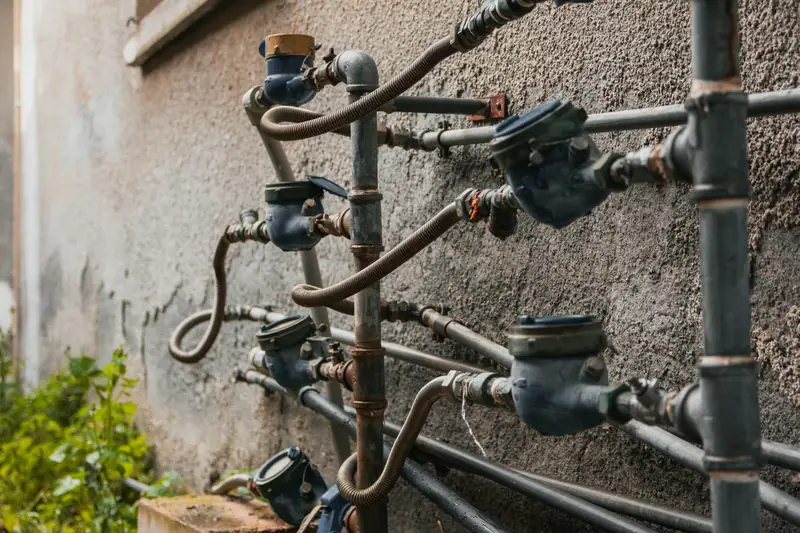
Sacramento water bills are fully metered: since January 1, 2025 state law has required a meter on every urban connection, so the reading on your meter now sets most of what you pay.
Checked against its sources by Levee Line · how figures are sourced · Last checked
Readings first
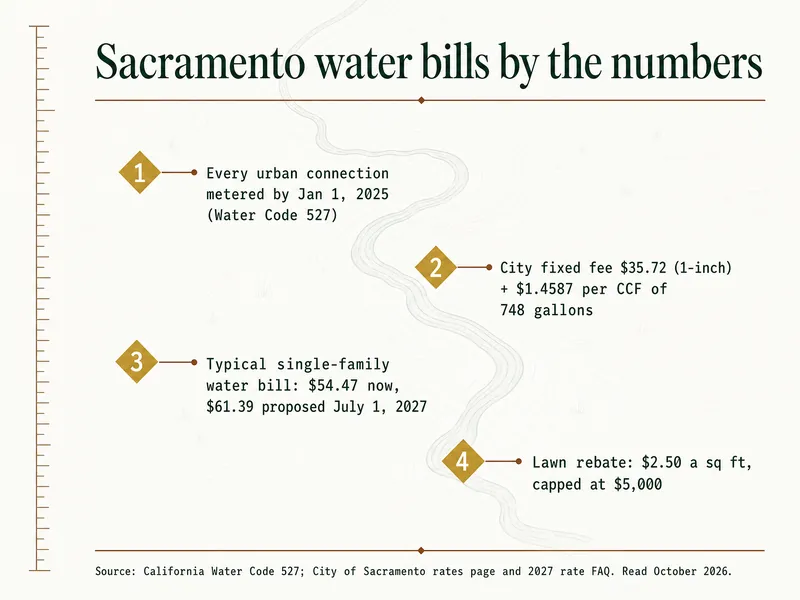
- Water Code 527 set January 1, 2025 as the deadline for meters on every urban connection in California.
- City of Sacramento metered charges: $35.72 a month for a 1-inch meter plus $1.4587 per CCF (748 gallons), unchanged since 2020.
- A five-year City rate increase is proposed from July 1, 2027; the typical single-family water bill would go from $54.47 to $61.39 in year one if adopted.
- Leak check: two hours with no water running, meter read before and after, per EPA WaterSense.
- The City's limited-time lawn rebate is $2.50 a square foot, up to $5,000, for applications through February 28, 2027.
- Income-qualified City customers, and those on SMUD's Energy Assistance Program Rate, can apply for a utility rate discount.
This folder covers what a Sacramento-region home pays for water and how to pay less. It quotes the City of Sacramento's figures because the City publishes the most detail; other suppliers bill on the same pattern with their own numbers.
How is a Sacramento water bill calculated?
A metered bill is a fixed monthly charge plus a charge for each unit of water. The City of Sacramento's services and rates page lists $35.72 a month for a 1-inch meter and $1.4587 per CCF, the unit of 100 cubic feet that equals 748 gallons.
Because the fixed fee is large, the bill does not fall in step with use. The City Auditor's December 2024 fund review found the fixed fee brings in about 59 percent of rate revenue, and that the City delivered 25.8 percent less water in 2023 than in 2014. The proposed 2027 structure shifts more of the bill onto use.
The full worked examples, the CCF arithmetic and the December 2026 hearing are on the water bill and meters page.
Can the water meter show a hidden leak?
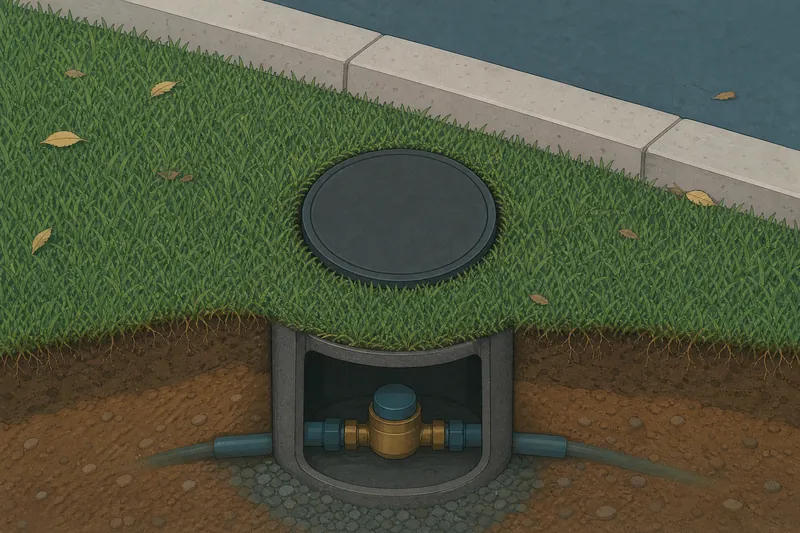
Write down the meter reading, run no water for two hours, and read it again; EPA WaterSense says any change suggests a leak. Shut off the sprinkler timer, washing machine and ice maker before you start so they do not move the dial.
EPA estimates that household leaks waste more than 9,300 gallons a year on average and that a few drops of food coloring in a toilet tank will show a leaking flapper within 10 minutes. City of Sacramento customers can also sign up for hourly use data and leak alerts through the City's water tracking website.
A confirmed leak may qualify for a City reimbursement of up to $500. The steps, and what the rebate will not pay for, are on the bill and meters page.
Readings for this folder
- Jan 1, 2025State deadline for meters on every urban connectionCalifornia Water Code 527
- 25.8%Drop in water the City delivered, 2014 to 2023City Auditor, December 2024
- $54.47Typical single-family City water bill per month nowCity of Sacramento 2027 rate FAQ
- $61.39Proposed typical monthly water bill from July 1, 2027City of Sacramento 2027 rate FAQ
- 2 hoursNo-use window for the meter leak testEPA WaterSense
Which water rebates are open now?
In October 2026 the City of Sacramento listed six water rebates: lawn replacement, toilets, drip and controller upgrades, leak repair, rain barrels and laundry-to-landscape graywater, per its rebates page. Toilet rebates run to $175 for a pre-1992 toilet; drip conversion and a smart controller can each earn up to $400.
Outside the City, each supplier runs its own list. The Regional Water Authority's Be Water Smart site sorts programs by supplier and address. All of them ask for approval before the work starts. The water-saving rebates page has the City's conditions in full.
Do lawn conversions pay off?
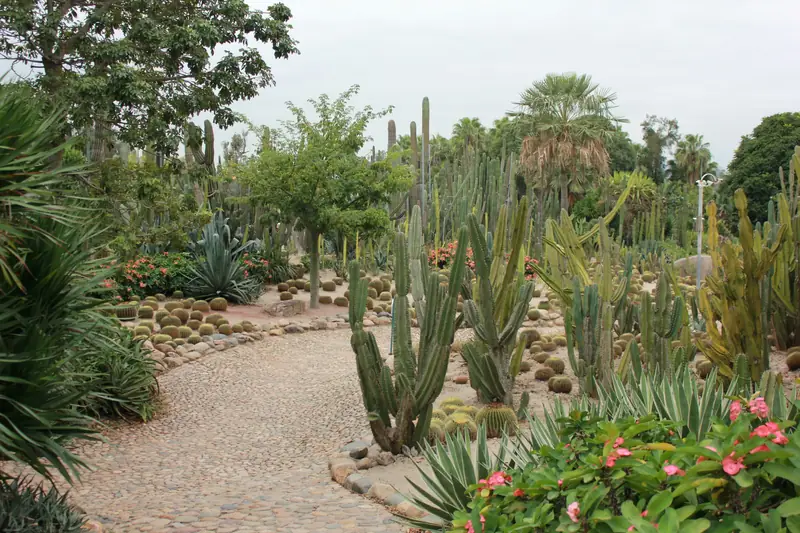
The rebate pays a set share: at the City's limited-time $2.50 a square foot, a 1,000-square-foot lawn earns $2,500, and a single-family home is capped at $5,000. Whether the rest of the cost comes back through lower bills depends on how much the lawn was watered and on contractor prices, and no source read for this site publishes a Sacramento payback figure.
What the numbers do show is where the money goes. The City's meter flyer says metered bills run higher in summer and lower in winter, which is the outdoor watering showing up. Every CCF not used saves $1.4587 at today's City rate; the fixed charge stays.
Conditions matter as much as the rate: pre-approval, at least 60 percent plant coverage, no artificial grass, and five years in place. Read the grass conversion page before you hire anyone.
Where can you get help paying a water bill?
City of Sacramento customers can apply for the City's utility rate assistance program, which discounts water, sewer and garbage charges for households under the income limits or on SMUD's Energy Assistance Program Rate. The financial assistance page lists the steps; a recent SMUD bill showing that rate is the shortest route.
Customers who fall behind can ask the City about a payment arrangement; the rates page says water may be shut off once a bill is more than two months past due. Customers of Sacramento Suburban, Citrus Heights, Carmichael, Golden State Water or another supplier should ask that supplier directly.
What else is in this folder?
 Bills and rebates: Sacramento water bill and meters, explained
- Bills and rebates: Sacramento water-saving rebates in 2026
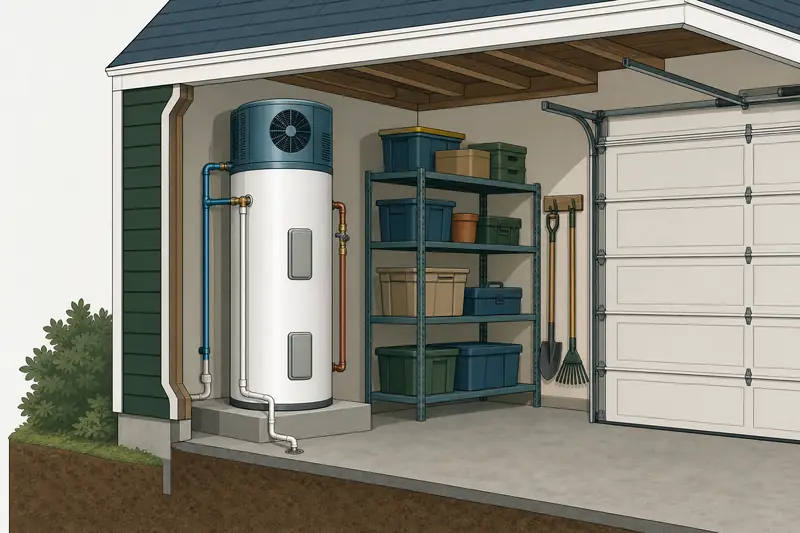 Water heaters: SMUD heat pump water heater rebate
 Supply: Which water district serves your address
Sounding notes
This hub draws on California Water Code 527, the City of Sacramento's services and rates page, 2027 rate FAQ, rebates, grass conversion and financial assistance pages, the 2024 City Auditor fund review, the City's water meter flyer, the EPA WaterSense leak page and Be Water Smart's rebate finder, read in October 2026. The 2027 figures are proposals until the City Council votes after the December 2026 hearing. Left out: other suppliers' rate tables, which were not read, and any estimate of lawn-conversion payback.
Downstream questions
Are all Sacramento homes on water meters now?
Yes for City of Sacramento customers: the City Auditor wrote in December 2024 that all water customers are metered. Water Code 527 set January 1, 2025 as the statewide deadline for urban suppliers. Townhomes and condos may share one master meter.
How much water does a Sacramento household use in a month?
It varies widely with yard size and season, and no supplier publishes one household figure that fits everyone. Divide your bill's CCF figure by 748 gallons to see your own number. Comparing a July bill with a January bill shows how much goes outdoors.
Will the 2027 rate increase definitely happen?
Not yet. The City mailed Proposition 218 notices in August 2026 and holds the public hearing in December 2026; a majority written protest by property owners would block it. If adopted, it starts July 1, 2027.
Who sets water rates outside the City of Sacramento?
Each supplier's board or council sets its own rates. The City's FAQ compares typical monthly water bills at about $101 for Elk Grove and $100 for Sacramento Suburban Water District, and $43 for Sacramento County Water Agency; check each supplier for its own schedule.
Can a high water bill mean the meter is wrong?
It can, but a leak or summer watering is more often the cause. Run the two-hour meter test first. If the meter moves with everything off, look for the leak; if it seems to misread, the City's meter flyer says a City meter reader can check its function.
Do rebates lower the fixed part of the bill?
No. Rebates pay toward equipment or landscaping; the monthly service charge depends on meter size and stays the same. Savings come only from the volume charge on water you no longer use.
Back upstream: every Sacramento-region tap water reading