Folder · 5 pages
Sacramento Water Treatment: What to Filter
Sacramento water treatment at home is optional for most addresses: suppliers' 2025 reports show free chlorine near 0.8 mg/L, no lead service lines, and chromium 6 and PFAS concerns limited to a few groundwater systems.
Checked against its sources by Levee Line · how figures are sourced · Last checked
Readings first
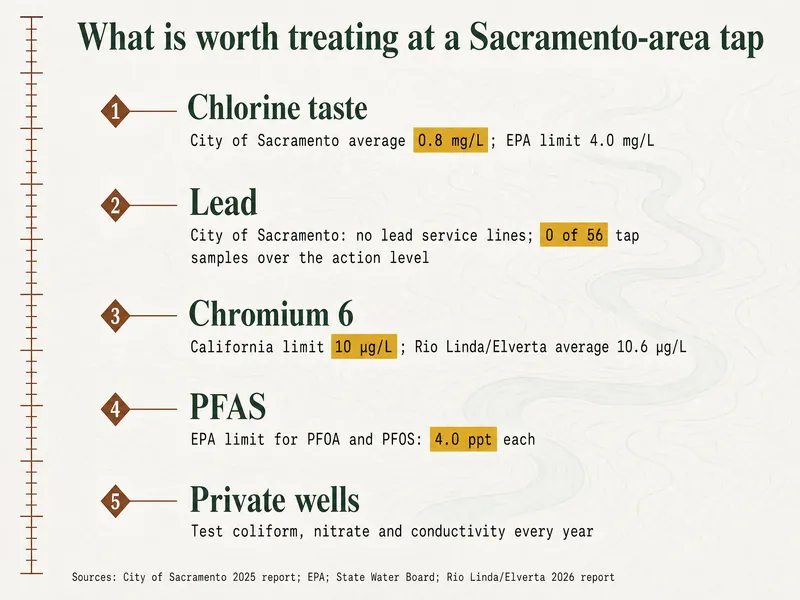
- The City of Sacramento's 2025 annual report averages 0.8 mg/L chlorine in its pipes, under EPA's 4.0 mg/L ceiling.
- California's inventories of nearly 10 million service lines reported no lead lines, per the State Water Board.
- Rio Linda/Elverta's wells average 10.6 µg/L hexavalent chromium against the state's 10 µg/L limit, with treatment in design.
- Sacramento County Water Agency made four Laguna-area wells with PFAS emergency-use only; they did not serve the system in 2025.
- EPA WaterSense says a typical under-sink reverse osmosis unit sends 5 gallons or more to drain per gallon treated.
- Private well owners are advised to test coliform, nitrate and conductivity every year.
Does Sacramento water treatment leave a taste?
Yes, a mild chlorine one: every supplier that names its disinfectant uses free chlorine, and the City's 2025 distribution average reads 0.8 mg/L. None reports chloramine. Reports print this in ppm, the same as mg/L; smaller amounts appear in ppb and ppt.
EPA's maximum residual disinfectant level for chlorine is 4.0 mg/L, so the taste is a preference question. An open pitcher in the refrigerator, a filter certified to NSF/ANSI 42, or a whole-house carbon tank are the options, cheapest first, compared on chlorine taste and carbon filters.
Readings across the treatment topics
- 0.8 mg/LChlorine residual in City of Sacramento pipes, 2025City of Sacramento 2025 CCR
- 0Lead service lines in California inventories of nearly 10 million linesState Water Board
- 10 µg/LCalifornia hexavalent chromium limit since Oct 1, 2024State Water Board
- 2.3 galMost a WaterSense-labeled RO unit may send to drain per treated gallonEPA WaterSense
When is reverse osmosis worth it?
When a report or lab test shows a contaminant the unit is certified to reduce, which is more likely on groundwater than river water. EPA WaterSense says it does not intend to promote reverse osmosis "for all applications", and a typical unit sends 5 gallons or more to drain for each gallon it makes.
On soft lake and river water the City of Sacramento averages 205 mg/L dissolved solids and San Juan's treated water 31 mg/L, so reverse osmosis mainly changes taste. The certification details, running costs and drain water are on reverse osmosis in Sacramento.
Which filters are certified for lead?
Look for NSF/ANSI 53 on a filter or NSF/ANSI 58 on a reverse osmosis unit, and make sure lead itself appears among the claims. EPA's June 2024 lead-filter handout adds: find the certifier's mark on the box, then confirm the model in that certifier's directory.
In 2023 sampling, no City of Sacramento home of the 56 tested exceeded the action level, while the EID Main system in El Dorado Hills counted 3 of 55 above it. With no lead service lines reported, older brass fixtures and solder inside the house are the usual source. Testing steps and filter choices are on lead in Sacramento tap water.
What about chromium 6 and PFAS?
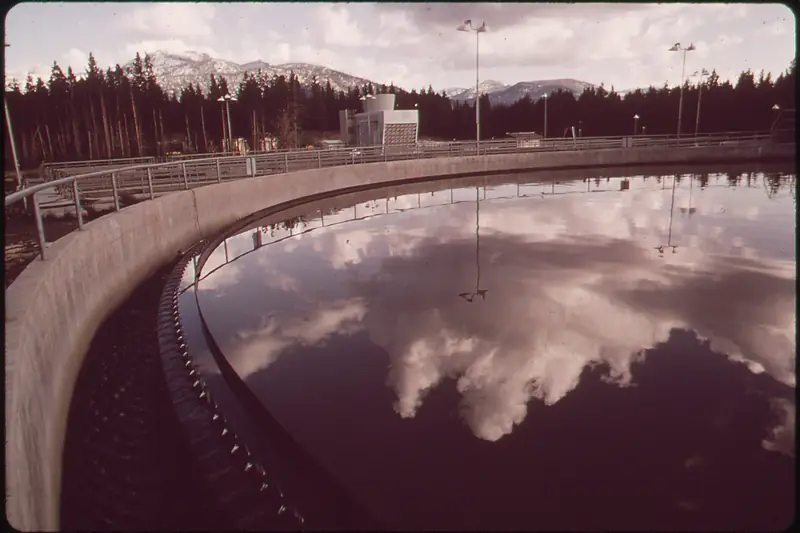
Both are groundwater questions here, and most suppliers report results below the limits. Against the state's 10 µg/L hexavalent chromium standard, Rio Linda/Elverta averages 10.6 µg/L, with a compliance date of October 2027 by its own account; the City of Sacramento averages 3.5 µg/L.
For PFAS, the federal 2024 rule caps PFOA and PFOS at 4.0 ppt apiece, and in May 2026 EPA proposed moving their compliance date to 2031. SCWA pulled four Laguna wells; most river-supplied systems report none detected. Supplier-by-supplier readings and certified filters are on chromium 6 and PFAS.
How are private wells treated?
In stages, once a lab report is in hand: grit removal leads, iron and manganese follow, a softener comes next, and UV closes the run, while reverse osmosis serves only the kitchen. California's GAMA well testing advice is a test each year, with basic lab sampling priced at $100 to $400.
Penn State Extension's iron and manganese article puts the staining thresholds at 0.3 mg/L iron and 0.05 mg/L manganese, and notes oxidized iron fouls softener resin, which is why the iron stage comes before the softener. The full order, with what each stage does and does not handle, is on well water treatment.
 Treatment: Chlorine taste and carbon filters
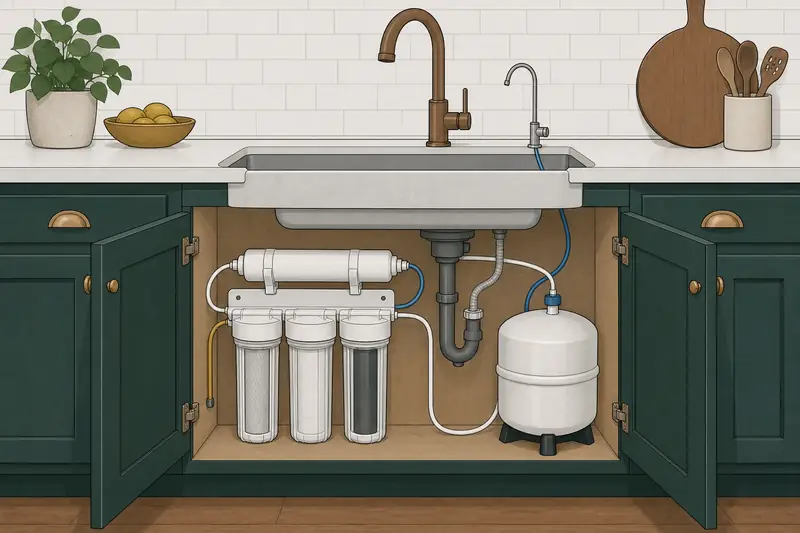 Treatment: Is reverse osmosis worth it in Sacramento?
 Treatment: Lead in Sacramento tap water: testing and filters
 Treatment: Chromium 6 and PFAS readings by supplier
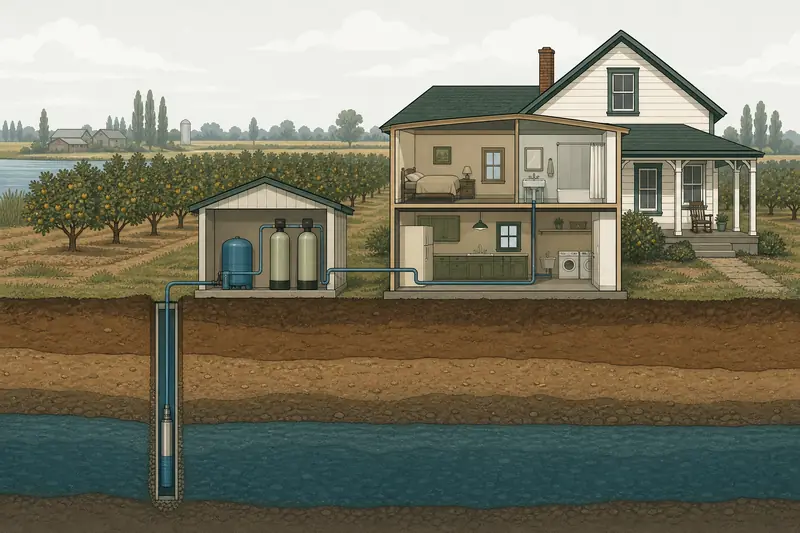 Treatment: Well water treatment, stage by stage
Sounding notes
This hub summarizes the five treatment pages. Figures come from 2025 reports by the City of Sacramento, the county water agency, El Dorado Irrigation District, San Juan and Sacramento Suburban; Rio Linda/Elverta's report issued in 2026; the State Water Board's service line, chromium 6 and well testing pages; and EPA's WaterSense, PFAS and drinking water regulation pages. Everything was read in October 2026. Elk Grove Water District publishes its own report; check it, since no Elk Grove reading is used here. Left out: product claims that no certifier backs.
Downstream questions
Do most Sacramento homes need a water filter?
Not for safety, going by suppliers' 2025 reports: chlorine sits well under EPA's ceiling and no lead service lines were reported. A filter is mostly a taste choice unless your own report or test shows a specific contaminant.
Which certifier should a filter listing name?
Any ANSI-accredited certifier: NSF, WQA, IAPMO R&T, UL Solutions or CSA Group, per EPA. Check the model in that certifier's online directory.
Does a softener count as water treatment for safety?
No. A softener handles hardness and holds no certification for lead, nitrate, arsenic, chromium 6 or bacteria.
Where do I find my supplier's readings?
In its annual water quality report, usually posted each summer. Finding your water district shows which report applies to your address.
Are whole-house systems better than one-tap systems?
They treat more water at much higher cost. EPA WaterSense says point-of-use devices suit drinking and cooking water, and point-of-entry systems can cost thousands of dollars.
How often should treatment be checked?
On the maker's schedule for cartridges, membranes and lamps, plus a retest after any new equipment goes in. EPA warns that unmaintained systems can make water worse.
Back upstream: every Sacramento-region tap water reading